25 Ways to Save $200 a Month on Groceries
In this article
Groceries are one of the biggest monthly bills for most households — and one of the easiest to shrink without eating worse. You do not need extreme couponing, a warehouse membership, or a diet of plain rice. Small, repeatable habits do the heavy lifting. Below are 25 beginner-friendly ways to save on groceries, grouped by where they happen: planning, in the store, cooking, storage, and everyday habits. Each tip includes a small estimated saving. Together, the example estimates add up to $200 a month, and the note at the end explains how to read those numbers honestly.
Plan Before You Shop
- Make a weekly meal plan. Decide on five or six dinners before you shop, so every item you buy has a purpose. Estimated saving: $20 a month.
- Always shop with a list. A written or phone list keeps impulse extras out of the cart. Estimated saving: $12 a month.
- Check your pantry and fridge first. "Shop your kitchen" before the store so you stop buying duplicates of what you already own. Estimated saving: $8 a month.
- Shop once a week, not daily. Every extra trip is another chance to overspend; one planned trip keeps it contained. Estimated saving: $10 a month.
- Set a grocery budget cap. Give groceries a firm monthly number — for example $150 to $200 for a small household — and track it weekly. Estimated saving: $10 a month.
In the Store
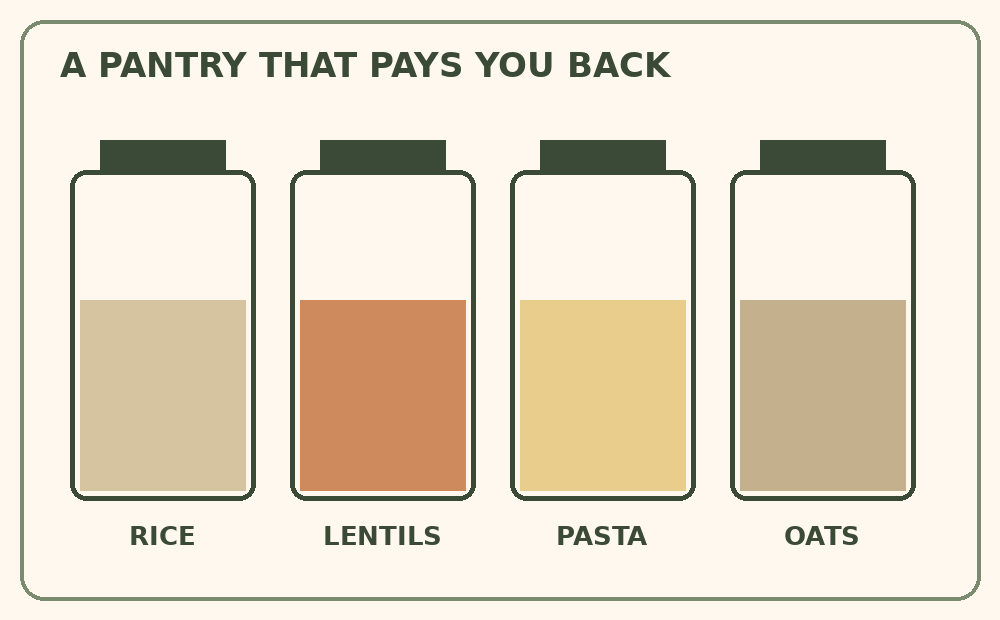
- Switch to store brands. Store-brand staples like rice, pasta, oats, and canned goods are often made to the same standard for less. Estimated saving: $14 a month.
- Compare unit prices, not shelf prices. The price per ounce or per pound on the shelf tag tells you which size is actually cheaper. Estimated saving: $8 a month.
- Never shop hungry. A snack before the trip prevents hunger from filling your cart with extras. Estimated saving: $6 a month.
- Use a basket for small trips. If you only need five items, a basket physically limits impulse buying. Estimated saving: $6 a month.
- Buy produce in season. Seasonal fruits and vegetables cost less and taste better than out-of-season imports. Estimated saving: $9 a month.
- Choose frozen vegetables when fresh is pricey. Frozen peas, corn, and mixed vegetables are nutritious, cheap, and never rot in the drawer. Estimated saving: $7 a month.
Cooking and Leftovers
- Cook once, eat twice. Double dinner recipes on purpose and pack the second half for tomorrow's lunch. Estimated saving: $12 a month.
- Add one meatless dinner a week. Beans, lentils, and eggs cost a fraction of meat and make filling meals. Estimated saving: $10 a month.
- Take leftovers for lunch. Replacing even two bought lunches a week with leftovers adds up fast. Estimated saving: $14 a month.
- Buy whole ingredients, not convenience cuts. Whole vegetables, block cheese, and whole chicken cost less per pound than pre-cut versions. Estimated saving: $6 a month.
- Turn leftovers into a new meal. Leftover rice becomes fried rice; leftover vegetables become soup or a stir-fry. Estimated saving: $5 a month.
- Cook the right amount. Measure rice, pasta, and grains so food is eaten, not scraped into the trash. Estimated saving: $5 a month.
- Batch cook on one day. One weekend cooking session fills the fridge with ready meals and removes the "too tired, let's order in" moments. Estimated saving: $8 a month.
Pantry and Storage Habits
- Store food so it lasts. Airtight containers and proper fridge placement keep produce and dairy fresh days longer. Estimated saving: $6 a month.
- Use the "first in, first out" rule. Move older items to the front of shelves so they get used before they expire. Estimated saving: $4 a month.
- Freeze what you will not use in time. Bread, milk, cooked rice, and herbs all freeze well and stay out of the trash. Estimated saving: $4 a month.
- Grow a few herbs on a windowsill. A small pot of mint, cilantro, or green onions replaces repeated small purchases. Estimated saving: $3 a month.
Everyday Habits
- Drink water instead of soda at home. Swapping a few sodas a week for water is cheaper and healthier. Estimated saving: $6 a month.
- Carry snacks from home. A homemade snack in your bag beats a convenience-store purchase every time. Estimated saving: $4 a month.
- Do one "pantry cleanout" meal a month. Build one dinner entirely from what is already at home and skip that day's shopping. Estimated saving: $3 a month.
How the $200 Adds Up
| Group | Tips | Example saving |
|---|---|---|
| Plan before you shop | 5 tips | $60 |
| In the store | 6 tips | $50 |
| Cooking and leftovers | 7 tips | $60 |
| Pantry and storage | 4 tips | $17 |
| Everyday habits | 3 tips | $13 |
| Total example | 25 tips | $200 |
A quick honesty note: these are example estimates for a typical small household, not guarantees. Your real savings will vary with your family size, local prices, and how many of the 25 habits you actually use. You do not need all 25. Even eight or ten of them can realistically free up $75 to $100 a month — real money you can redirect to savings or debt.
FAQ
Do I need coupons to save $200 a month on groceries? No. None of the 25 tips above requires a single coupon. Planning, store brands, unit prices, and wasting less food do most of the work.
What if I have a big family? The same habits apply, and your savings can be even larger because you buy in bigger quantities. Meal planning and batch cooking help large households the most.
Which three tips should a total beginner start with? Start with a weekly meal plan (tip 1), always shopping with a list (tip 2), and taking leftovers for lunch (tip 14). Together, their example estimates alone come to $46 a month.
Conclusion
Saving $200 a month on groceries is not one big trick. It is 25 small habits — a plan, a list, smarter store choices, better cooking routines, and less waste — stacking up together. Pick five tips this week, add five more next week, and watch your grocery total shrink. Your next step: put the money you free up somewhere it protects you — our beginner plan to Save $300 in 4 Weeks — Start Your Emergency Fund shows you how to turn grocery savings into a real safety net.
New here?
Start with the plan that matches your next money goal, and save the pin so you can find it again.
Follow Budget Bloom on Pinterest